 EN
EN PT
PT


Head Offices:
Hotline: (877) 289-6429
Working Hours:
Monday to Saturday 6:00 AM – 7:00 PM, Sunday Closed
Website: https://mrmsteel.ai/
What Is Green Steel? In the context of increasingly severe climate change and the global commitment of nations to Net Zero targets, the steel industry—one of the largest industrial emitters—faces an urgent need for transformation. Green steel has emerged as a strategic solution, combining advanced production technologies, renewable energy, and circular economy models to minimize negative environmental impacts. This article helps clarify what green steel is, its environmental benefits, development trends, production technologies, costs and pricing, and the current progress of sustainable industrial development, thereby supporting appropriate choices for enterprises and future construction projects.
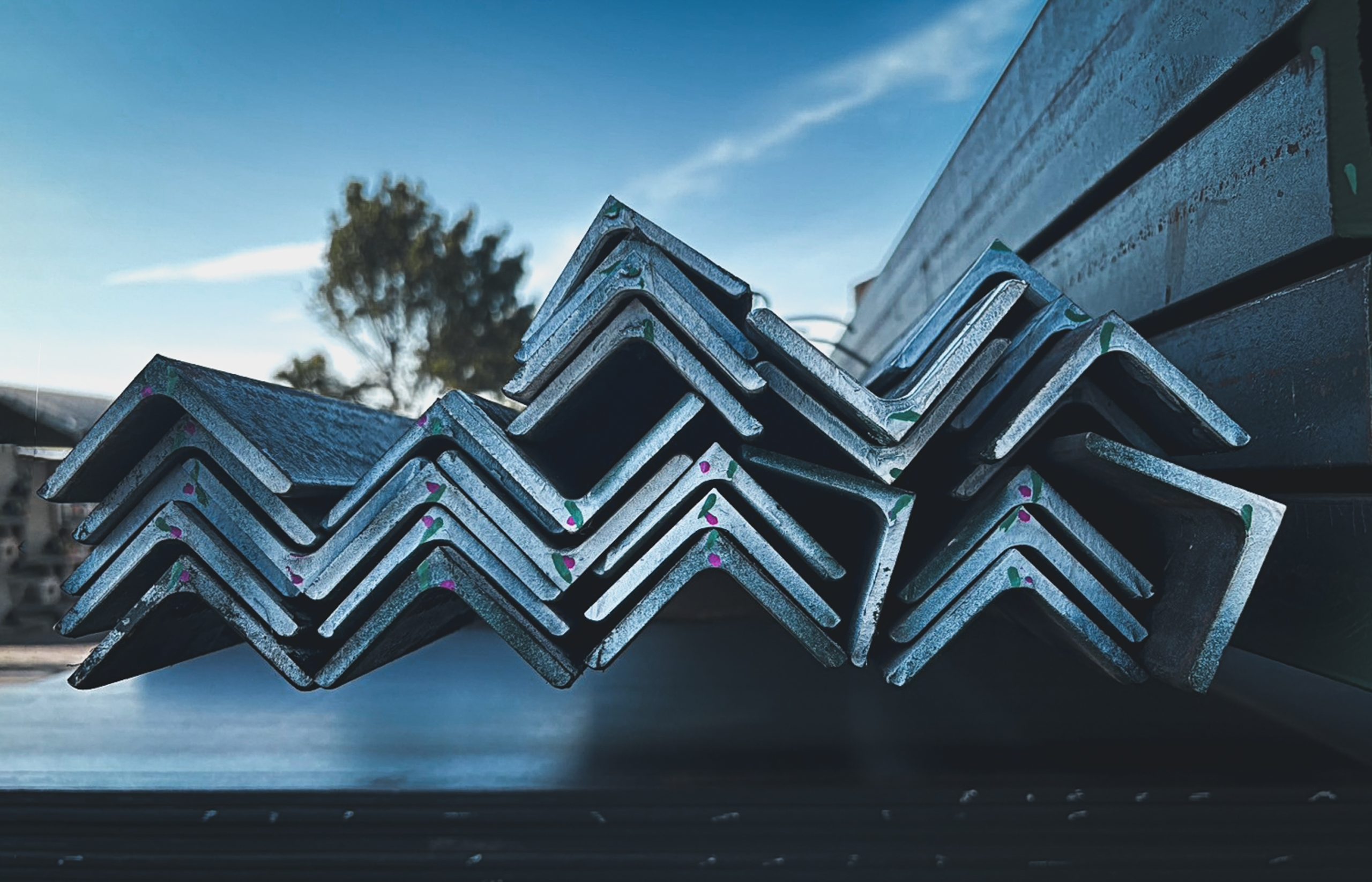
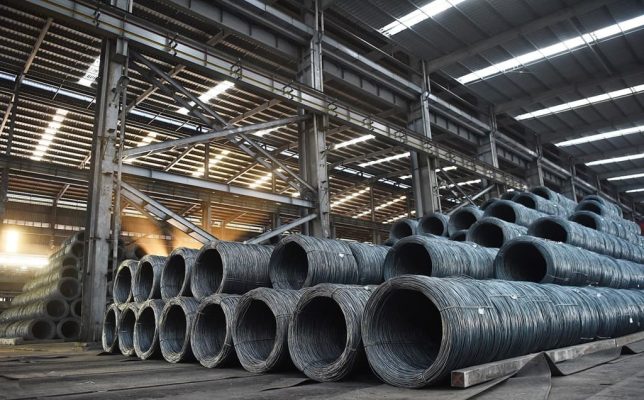
Green steel is a term used to refer to steel products manufactured through environmentally friendly processes, in which the core objective is to minimize CO₂ emissions and limit the use of fossil fuels. Instead of relying on coke as in traditional steelmaking methods—which generate large amounts of greenhouse gases—green steel applies renewable energy sources such as solar power, wind power, and advanced metallurgical technologies such as electric arc furnaces or hydrogen-based iron ore reduction.
The development of green steel not only reflects a new technological trend but also demonstrates the steel industry’s long-term commitment to sustainable development and carbon neutrality goals. According to assessments by Stavian Industrial Metal, the transition toward green steel production is a strategic move, especially in the context of major markets such as the European Union implementing the Carbon Border Adjustment Mechanism (CBAM), which requires steel-exporting enterprises to meet increasingly stringent emission standards.
In general, green steel is formed through the combination of several key factors, including:
As the traditional steel industry faces mounting challenges related to greenhouse gas emissions and large-scale energy consumption, green steel is regarded as a breakthrough solution that helps reshape the metallurgical industry toward sustainability and environmental responsibility. By applying modern technologies and eco-friendly production orientations, green steel delivers multiple outstanding benefits:
Reduction of greenhouse gas emissions: Green steel production processes significantly reduce CO₂, SO₂, and other toxic gas emissions, which are primary contributors to the greenhouse effect and climate change. Replacing coke coal with green hydrogen and renewable energy sources not only cuts emissions but also opens new pathways for cleaner and more sustainable steel development.
Energy optimization and resource conservation: Through advanced steelmaking technologies, green steel substantially reduces fossil fuel consumption while improving energy efficiency. Prioritizing recycled steel scrap helps limit the extraction of virgin iron ore, thereby conserving natural resources and reducing negative environmental impacts.
Mitigation of air, soil, and water pollution: Environmentally friendly green steel production processes reduce the generation of fine dust, toxic emissions, and solid waste. In addition, modern water circulation and treatment systems in steelmaking minimize the risk of water pollution, contributing to the protection of community living environments.
Promotion of the circular economy model: Green steel is a representative material of the circular economy, as it can be recycled and reused multiple times without degradation in quality. This reduces pressure on waste treatment systems while helping maintain ecological balance and improve resource utilization efficiency.
Contribution to global sustainable development goals: Beyond meeting material demands for construction and industry, green steel plays a vital role in achieving carbon neutrality (Net Zero) and fulfilling international environmental commitments. The use of green steel enhances corporate brand image, reinforces social responsibility, and establishes leadership in global green production trends.
In the transition toward a low-emission industrial economy, the steel industry is witnessing the emergence and application of numerous advanced production technologies aimed at reducing CO₂ emissions, optimizing energy use, and achieving carbon neutrality by 2050. Below are five core technologies that form the foundation of global green steel development.
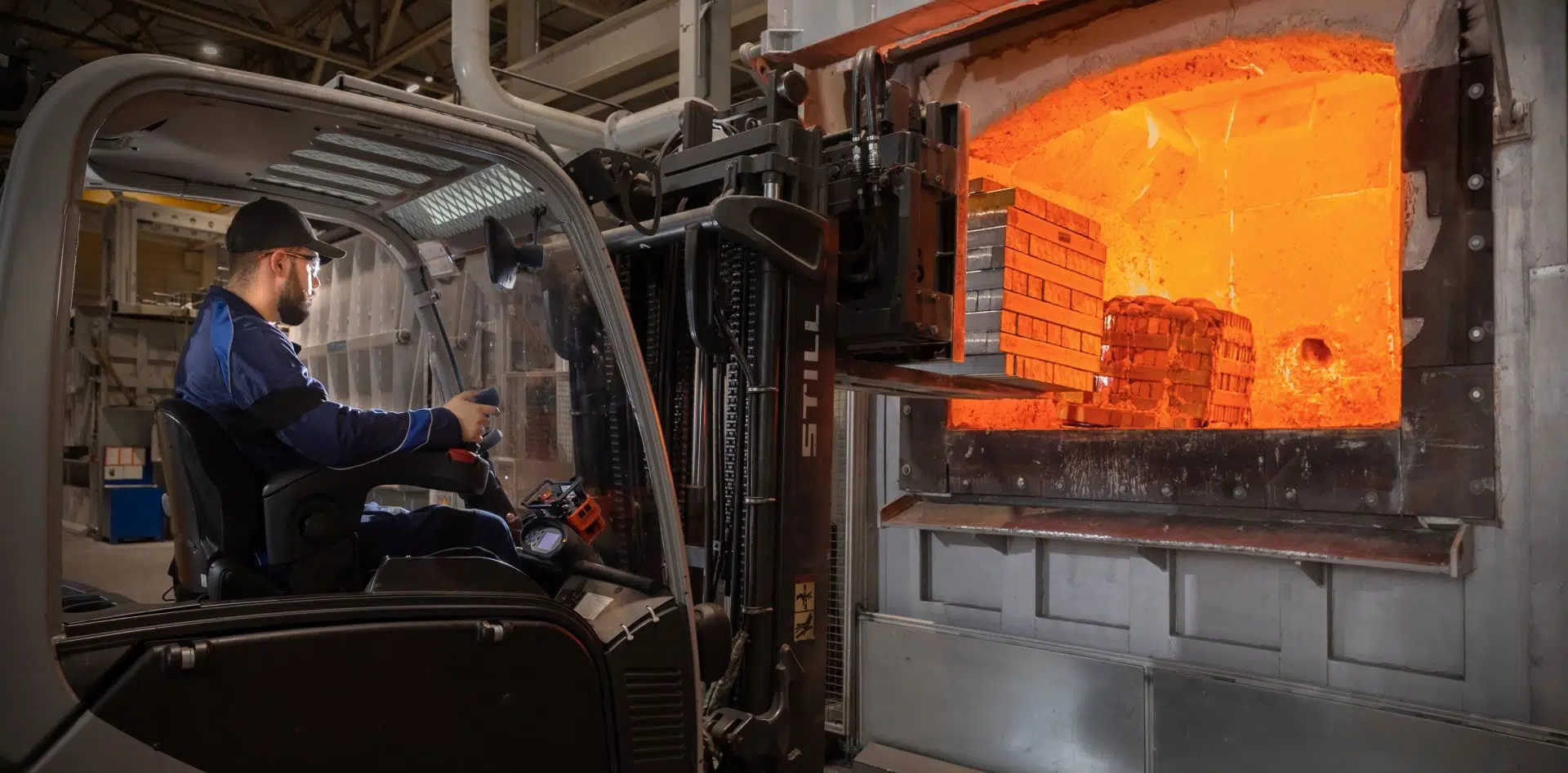
Electric Arc Furnace (EAF) technology: The Electric Arc Furnace (EAF) uses electricity to melt steel scrap or direct reduced iron (DRI), replacing traditional blast furnaces that depend on coke coal. As a result, EAF technology significantly reduces CO₂ emissions, especially when electricity is supplied from renewable sources such as solar or wind power. However, large-scale adoption requires a stable supply of high-quality steel scrap and power infrastructure capable of supporting high capacity.
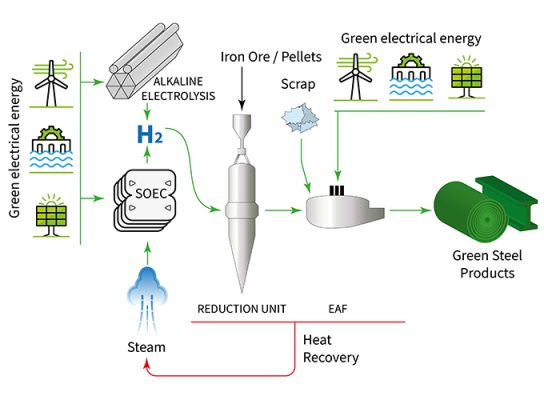
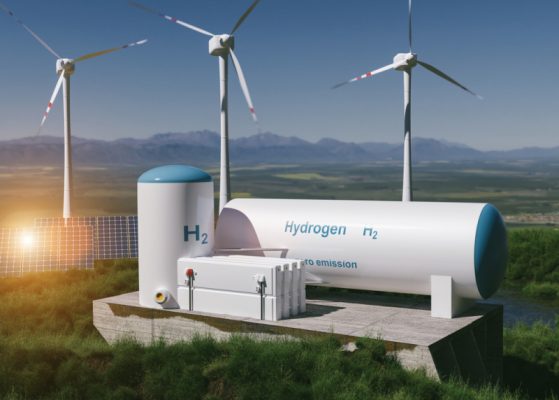
Hydrogen-based Direct Reduction (DRI) technology: DRI technology uses green hydrogen (H₂) instead of coke coal to remove oxygen from iron ore, producing direct reduced iron. The key breakthrough of this technology is that water vapor is the only by-product, resulting in near-zero CO₂ emissions and reducing greenhouse gases by up to 95% compared with traditional methods. Nevertheless, scaling up DRI-H₂ depends heavily on the availability and supply of green hydrogen, which requires large-scale renewable energy infrastructure and high investment costs.
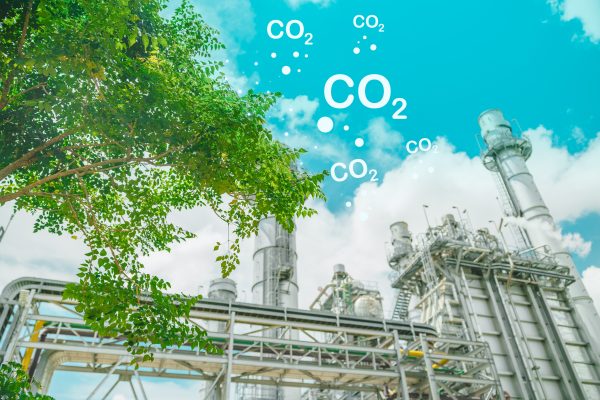
Carbon Capture and Storage (CCS) technology: CCS technology enables the capture of CO₂ generated during steelmaking and its storage underground or reuse in other industries. This is considered a transitional solution that allows existing steel plants to reduce emissions while waiting for green technologies to mature and become widespread. Despite its effectiveness, CCS faces challenges related to high investment costs and the need for safe, geologically suitable storage infrastructure.
Use of natural gas as a substitute for coke coal: Natural gas is regarded as an intermediate solution in the transition toward green steel production. Compared with coke coal, natural gas significantly reduces CO₂ emissions when used in DRI furnaces. Many steel plants adopt this model as a stepping stone before fully transitioning to green hydrogen. However, since natural gas remains a fossil fuel, it is not a long-term sustainable solution.
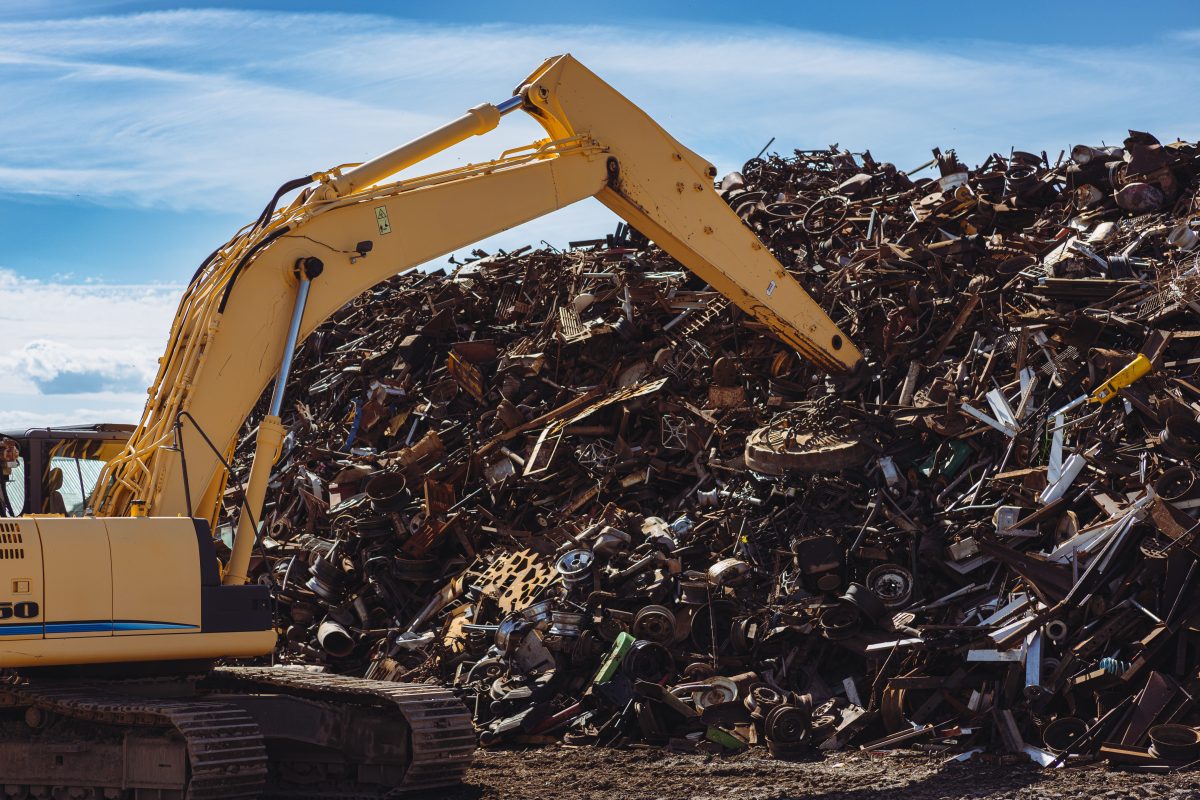
Steel scrap recycling: Recycling steel scrap, particularly when combined with EAF technology, is one of the most effective and feasible methods to promote green steel production. This approach reduces iron ore extraction, saves energy, and cuts CO₂ emissions across the entire value chain. Nevertheless, the supply of high-quality steel scrap remains limited, requiring long-term and systematic policies for collection, sorting, and recycling.
In the shift toward a low-carbon economic model, production costs and pricing are among the key factors determining the market penetration of green steel. Compared with conventional steel, green steel currently incurs higher costs, primarily due to technological, energy, and infrastructure requirements.
Green steel production costs are influenced by multiple factors, including:
First, advanced steelmaking technologies: The application of advanced technologies such as electric arc furnaces (EAF), hydrogen-based direct reduction (DRI-H₂), and carbon capture, utilization, and storage (CCUS) requires substantial upfront capital investment in equipment, production lines, and technological transformation.
Second, clean energy costs: Green steel relies heavily on renewable energy sources such as wind power, solar power, and especially green hydrogen. At present, the costs of these energy sources remain significantly higher than coke coal or conventional grid electricity, increasing production costs per ton of steel.
Third, supporting infrastructure and digital transformation: Green steel production requires hydrogen storage and transportation systems, emission management, and the integration of digital solutions to optimize operations. These represent additional investments that traditional steel production does not require or requires only minimally.
Fourth, limited production scale: As green steel technologies are still in the development phase and have not yet been widely deployed, economies of scale have not been fully realized, resulting in higher unit production costs.
Based on the above factors, green steel prices are currently significantly higher than those of conventionally produced steel. Reference price ranges indicate clear differences:
Conventional steel (blast furnace – BF/BOF): approximately USD 500–700 per ton.
Electric Arc Furnace steel (EAF, using steel scrap): approximately USD 600–800 per ton.
Natural gas-based Direct Reduced Iron steel (DRI-Gas): approximately USD 700–900 per ton.
Green hydrogen-based Direct Reduced Iron steel (DRI-H₂): may reach USD 1,000–1,500 per ton, up to twice the price of conventional steel.
Thus, green steel prices may currently be 30% to 100% higher than conventional steel. However, this price gap is gradually being accepted by the market, particularly in regions with strict environmental requirements.
Unlike traditional steelmaking processes based on blast furnaces, coke coal, and iron ore—which generate large volumes of CO₂—the “green” steel production process is designed to minimize carbon emissions, prioritize material recycling, utilize renewable energy, and apply advanced technologies to achieve sustainable development goals.
Raw material preparation is the decisive initial step in green steel production, prioritizing environmental friendliness and efficient resource use. Recycled steel scrap accounts for a large proportion, reducing the need for virgin iron ore extraction and significantly saving energy compared with traditional steelmaking. Clean iron ore is also used in direct reduction (DRI) processes, where ore is reduced using natural gas or hydrogen instead of coke coal. In parallel, clean energy sources such as wind power, solar power, hydropower, and green hydrogen play a critical role, forming the foundation for carbon emission reduction from the very beginning of the production chain.
Instead of using coke coal as in traditional blast furnaces, Direct Reduced Iron (DRI) technology applies natural gas or hydrogen to remove oxygen from iron ore. In particular, when green hydrogen (H₂) is used, the reduction reaction produces only water vapor (H₂O) rather than CO₂, enabling near-zero greenhouse gas emissions and making a significant contribution to carbon neutrality and sustainable metallurgical development.
At this stage, Electric Arc Furnaces (EAF) are used to melt steel scrap and direct reduced iron (DRI), with electricity preferably supplied from renewable sources such as wind and solar power. Compared with traditional coke-fired blast furnaces, EAF technology significantly reduces CO₂ emissions while offering high flexibility in quality control and production scale, aligning with the sustainable development orientation of the modern steel industry.
During this phase, unwanted impurities are removed and alloying elements are added in accordance with the technical standards of each product grade to meet mechanical property and durability requirements. Simultaneously, heat recovery and exhaust gas circulation technologies are applied to optimize energy efficiency and reduce production waste. Notably, the integration of Carbon Capture, Utilization, and Storage (CCUS) technology enables the capture of residual CO₂ emissions and their reuse in other industries, further reducing emissions and enhancing the overall sustainability of the steelmaking process.
Rolling, pressing, and forming processes are designed to maximize the utilization of residual heat, thereby reducing energy consumption and emissions. By-products such as steel slag, exhaust gases, and solid waste are not discarded but recycled and reused in other industries such as cement and construction materials. This approach improves resource efficiency and contributes to the establishment of a sustainable circular economy model within the metallurgical industry.
Green steel enterprises apply Measurement–Reporting–Verification (MRV) systems to monitor, control, and transparently disclose carbon emissions throughout the entire production process. Accordingly, green steel products must comply with international standards and certifications such as the EU Carbon Border Adjustment Mechanism (CBAM), ISO 14064 greenhouse gas management standards, and ESG criteria. Compliance not only ensures adherence to increasingly stringent legal requirements but also enhances brand credibility and global market competitiveness.
Green Steel Development Trends
In the context of the global push toward carbon neutrality and the transition to a circular economy model, the steel industry—traditionally regarded as a high-emission sector—is entering a pivotal phase of transformation. Green steel has emerged as a strategic pillar, driving technological innovation and shaping the sustainable future of the global metallurgical industry. Key current trends include:
Strong transition in production technologies: The steel industry is gradually moving away from traditional steelmaking models that rely on blast furnaces and coke, replacing them with advanced technologies such as electric arc furnaces (EAF), direct reduction using natural gas, and especially green hydrogen. This transition significantly reduces CO₂ emissions while improving energy efficiency and sustainability across the production chain.
Promotion of recycling and the circular economy: Green steel places strong emphasis on recycling steel scrap, reducing dependence on virgin iron ore. Increasing recycling rates not only saves energy but also alleviates pressure on natural resource extraction, thereby contributing to the development of a circular and sustainable steel value chain.
Increasing pressure from environmental policies and standards: Stricter environmental mechanisms and regulations—most notably the European Union’s Carbon Border Adjustment Mechanism (CBAM), along with greenhouse gas inventory and reporting standards—are compelling steel enterprises to accelerate the “greening” of their production processes. This represents both a major challenge and a powerful driver of transformation for companies seeking to maintain competitive advantages in international markets.
Wave of investment in large-scale green steel projects: Many countries and leading global steel corporations have launched and continue to implement green steel projects with investments reaching billions of USD, demonstrating long-term commitments to sustainable development. In Vietnam, the green steel complex in Nam Dinh is considered one of the pioneering and largest-scale projects in Southeast Asia, opening new prospects for the domestic steel industry.
Development of renewable energy alongside digital transformation: Green steel production is closely associated with prioritizing renewable energy sources such as wind power, solar power, and green hydrogen to reduce emissions throughout the production chain. At the same time, digital transformation plays a critical role in optimizing operations, managing energy, reducing waste, and ensuring transparent and accurate emission control.
Commitment to carbon neutrality and long-term sustainable development: Green steel is becoming an indispensable component in the Net Zero 2050 roadmaps of many countries and enterprises. The adoption of international standards, clean technologies, and sustainable governance models enables steel companies not only to meet global market requirements but also to affirm their pioneering role in building a modern, green, and responsible industrial future.
It is evident that green steel is no longer merely a trend-based concept, but is gradually becoming an inevitable standard of the global steel industry. Although current production costs and prices remain higher than those of traditional steel, in the long term, green steel delivers superior value in terms of environmental benefits, compliance with international policies, enhanced corporate reputation, and sustainable competitiveness in the market.
Throughout this transition, selecting reputable steel suppliers with strong market insight and a clear orientation toward sustainable development is critically important. MRM is one of the reliable steel suppliers that continuously updates green steel trends, environmentally compliant steel, and international standards. With experience, stable supply capacity, and a strong commitment to partnering with customers, MRM not only provides high-quality steel products but also delivers material solutions suitable for projects oriented toward sustainable development.
In the future, as green steel becomes the mainstream choice, enterprises that proactively collaborate with visionary suppliers like MRM will gain significant advantages, contributing to the development of a more efficient, cleaner, and environmentally friendly steel industry. Contact MRM Steel today via Hotline: (877) 289-6429 for consultation.