
 EN
EN PT
PT


Head Offices:
Hotline: (877) 289-6429
Working Hours:
Monday to Saturday 6:00 AM – 7:00 PM, Sunday Closed
Website: https://mrmsteel.ai/
The following content analyzes the causes of rusting and corrosion and highlights the importance of proper preservation of construction steel. Construction steel is a primary structural material that directly determines load-bearing capacity, long-term durability, and overall safety of a structure. However, under harsh environmental conditions such as high humidity, acid rain, salt-laden air, or chemical exposure, steel is highly susceptible to oxidation, electrochemical corrosion, and mechanical deformation if it is not preserved in accordance with proper technical procedures. Applying scientific steel preservation solutions during storage, transportation, and construction not only helps maintain material quality but also contributes to reducing economic losses, ensuring project schedules, and extending the service life of structures.
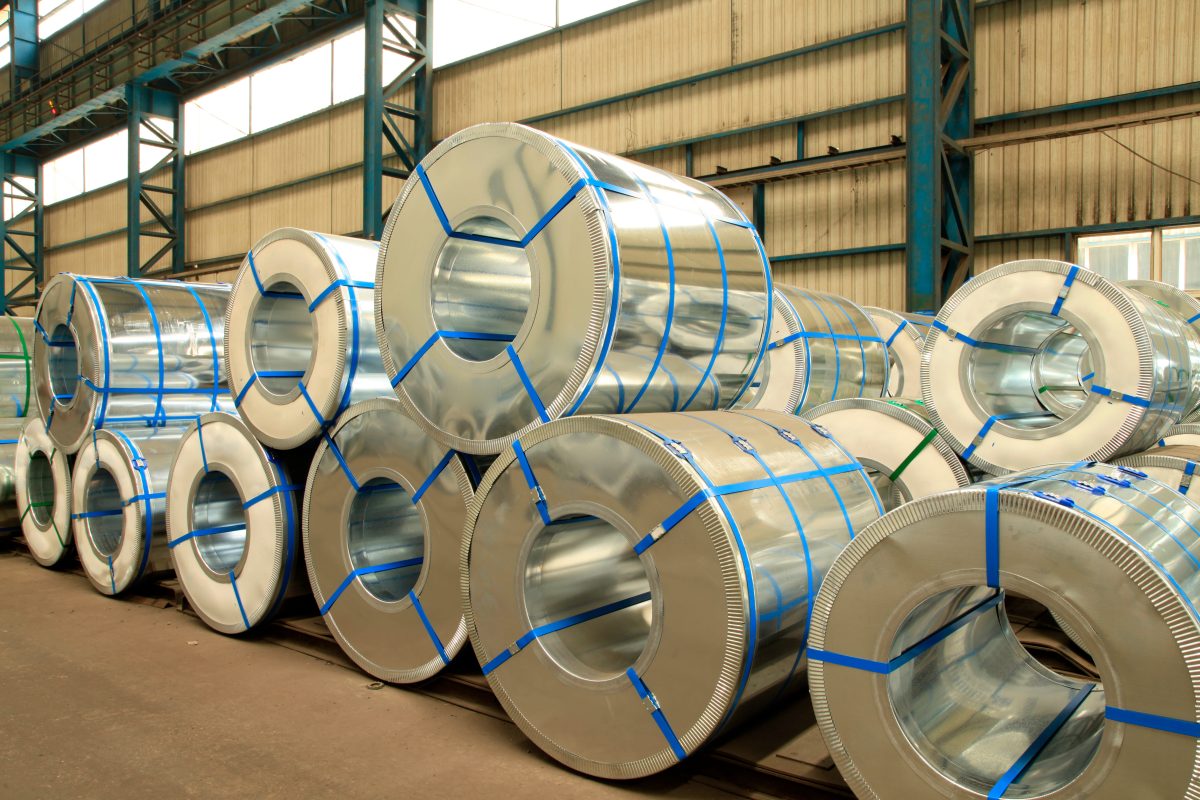
During storage, transportation, and construction, if steel is not preserved in compliance with technical procedures, it can easily be affected by environmental factors, leading to quality degradation and serious risks to the structure. Specifically, the main reasons include:
Limiting rust and metal corrosion: Steel tends to oxidize rapidly when exposed to humid air, rainwater, or chemical agents, forming rust layers on the surface. This corrosion phenomenon reduces the effective load-bearing cross-section and mechanical strength of steel. In reinforced concrete structures, the use of rusted steel also reduces the bond strength between steel and concrete, thereby shortening the service life and structural stability.
Ensuring durability and load-bearing capacity of the structure: In reinforced concrete, steel performs tensile, compressive, and bending functions. When steel becomes warped, deformed, or corroded during storage, the original design parameters are no longer guaranteed, weakening the load-bearing system. This can lead to cracking, settlement, and in severe cases, endanger the safety of the entire structure.
Reducing material losses and minimizing waste: Steel that is improperly preserved is prone to severe rusting, requiring cutting or removal from construction use. In addition, improper handling and storage can cause steel to become bent or damaged, making it unusable according to design requirements. This increases material loss rates, generates repair and replacement costs, and negatively affects the economic efficiency of the project.
Ensuring safety during construction: Rusty or surface-damaged steel can cause slipping and instability during lifting and processing. During cutting, welding, or bending operations, weakened steel bars may fracture suddenly, increasing the risk of occupational accidents on construction sites. Proper steel preservation plays a crucial role in ensuring worker safety.
Compliance with technical standards and acceptance requirements: Many projects require construction steel to meet strict quality standards such as TCVN, ASTM, and ISO. If steel quality deteriorates due to improper preservation, it may fail acceptance inspections, causing construction delays and legal risks for investors and contractors.
When steel is exposed to air with high humidity, water vapor facilitates oxidation reactions, leading to the formation of rust on the steel surface. Rainwater containing acids or airborne pollutants accelerates metal corrosion. In marine environments, high salt content and chloride ions can break down the natural protective layer of steel, causing faster and more severe rusting. In areas with industrial chemicals such as acids, alkalis, or salts, steel will suffer serious corrosion if not properly protected.
Chemical composition is a critical factor determining steel’s corrosion resistance. Steel with high carbon content tends to be more brittle and less resistant to corrosive environments compared to alloy steel. In addition, steel that is not galvanized, anti-rust painted, or surface-coated is directly exposed to external environments, increasing the risk of rusting. The presence of metallic impurities in steel can also cause localized corrosion, leading to gradual degradation of material quality.
During processing, improper welding, cutting, or heat treatment operations can damage the steel surface, removing zinc coatings or corrosion-resistant layers. Using inappropriate steel grades in harsh environments such as seawater, chemical zones, or high-humidity areas also accelerates deterioration. Moreover, failure to perform periodic cleaning, inspection, and anti-corrosion coating according to maintenance cycles increases corrosion rates, affecting the service life and safety of steel structures.
The storage of construction steel in warehouses is a critical stage in the overall construction material management process, directly affecting the quality, durability, and usability of steel before it is put into use. Under harsh climatic conditions, if steel is not stored in accordance with proper technical requirements, it is highly susceptible to corrosion, deformation, or deterioration of surface quality. Therefore, establishing and strictly following a scientific storage procedure that complies with technical standards is a mandatory requirement to ensure steel remains in optimal condition prior to use.
Steel storage warehouses must be designed appropriately to minimize adverse environmental impacts. First, the warehouse location should be elevated and equipped with an effective drainage system to prevent flooding or water seepage during the rainy season. The roof must be structurally sound, leak-proof, and capable of withstanding loads, while ensuring adequate ventilation through natural airflow openings or mechanical ventilation systems to reduce internal humidity. The warehouse floor should be paved with tiles or cast concrete and must not be left as natural soil, as this can absorb moisture and transfer dampness to the steel. In addition, the warehouse area should be planned rationally, providing sufficient space to store steel by category while ensuring convenient aisles for inspection, handling, and material in–out operations.
To prevent direct contact between steel and floor moisture, steel materials must be placed at least 20–30 cm above ground level using solid supports such as dry timber, bricks, or specialized steel racks. For bundled reinforcing bars or round bars, horizontal stacking is recommended, with two to three evenly spaced support points beneath each bundle to prevent sagging or bending during storage. When stacking multiple layers, spacers should be placed between layers to prevent slipping and reduce compressive stress. This helps maintain the original shape of the steel and limits surface scratches, which are vulnerable points for corrosion if the protective layer is damaged.
Environmental control within the warehouse is a key factor in preventing steel corrosion. Relative humidity should be maintained below 60%, and excessive temperature fluctuations should be avoided, as sudden changes can cause condensation to form on steel surfaces. During periods of high humidity or prolonged rainfall, dehumidifiers, ventilation fans, or industrial air-conditioning systems should be used to maintain stable conditions. Additionally, hygrometers and thermometers should be installed in the warehouse for regular monitoring, enabling timely adjustment of environmental control measures when necessary.
Steel stored in the warehouse should be clearly classified according to type, dimensions, steel grade, item code, and batch number. Proper organization not only improves inventory management efficiency but also facilitates monitoring of storage duration, surface condition, and potential risks of deterioration for each steel batch. Steel bundles should be clearly labeled or tagged for identification. The use of signage, warehouse layout diagrams, and inventory management software can further support inspection and material handling operations, ensuring fast and accurate stock movement. This approach helps prevent material mix-ups and avoids prolonged storage that could lead to quality degradation.
In actual construction practice, project sites do not always have sufficient conditions to store steel in enclosed warehouses. For many residential projects, small-scale constructions, or sites in rural areas, storing steel directly outdoors is often unavoidable. However, steel placed outdoors is directly exposed to rain, sunlight, humidity, and wind, which significantly increases the risk of corrosion, deformation, and quality degradation. Therefore, strict compliance with proper technical storage principles is essential to ensure that steel maintains the required quality before being put into construction use.
Covering steel with tarpaulins is a basic measure to protect it from direct exposure to rain, dew, and sunlight. However, tarpaulin covering must be carried out correctly and should not be completely airtight. If the steel is fully sealed without ventilation gaps, moisture can become trapped inside, leading to condensation and internal corrosion. The appropriate solution is to use thick plastic tarpaulins with waterproof properties, aluminum-coated surfaces, or UV-resistant layers. The tarpaulin should be elevated to create ventilation gaps on both sides, allowing air circulation and reducing moisture accumulation. In addition, the tarpaulin must be securely fastened with ropes, bricks, or retaining bars to prevent it from being blown away by strong winds. Regular inspection of the tarpaulin condition is necessary to promptly replace or reinforce it if tearing, loosening, or displacement occurs.
To prevent steel from coming into direct contact with rainwater and ground moisture, it should be stacked at least 20–30 cm above ground level. Supports such as dry timber, bricks, concrete blocks, or load-bearing steel beams treated with anti-corrosion coatings may be used. Elevating the steel not only provides moisture isolation but also facilitates drainage and airflow beneath the stacks. When stacking steel outdoors, it should be placed at a slight incline or arranged in a sloped configuration to allow rainwater to drain quickly without pooling on the surface. Completely flat horizontal stacking should be avoided, as contact points between steel members tend to retain water, accelerating oxidation and corrosion processes.
The location selected for outdoor steel storage has a significant impact on storage effectiveness. Storage areas should be elevated, well-drained, and not prone to flooding during heavy rainfall. Priority should be given to locations near retaining walls, fences, or temporary structures that can provide partial wind shielding, helping stabilize tarpaulin covers and prevent material displacement. Additionally, the storage ground should be firm and level, avoiding low-lying areas or soft soil that may settle. Where possible, the ground should be paved with concrete or bricks, or an additional moisture barrier tarpaulin should be laid beneath the supports to enhance moisture isolation and provide more effective steel protection.
Each type of construction steel has different characteristics in terms of shape, surface structure, and mechanical properties; therefore, each requires specific storage methods to ensure material quality during storage and use. Applying a single storage method to all types of steel may lead to bending, deformation, surface scratching, or an increased risk of corrosion. Below are detailed storage guidelines for commonly used construction steel types.
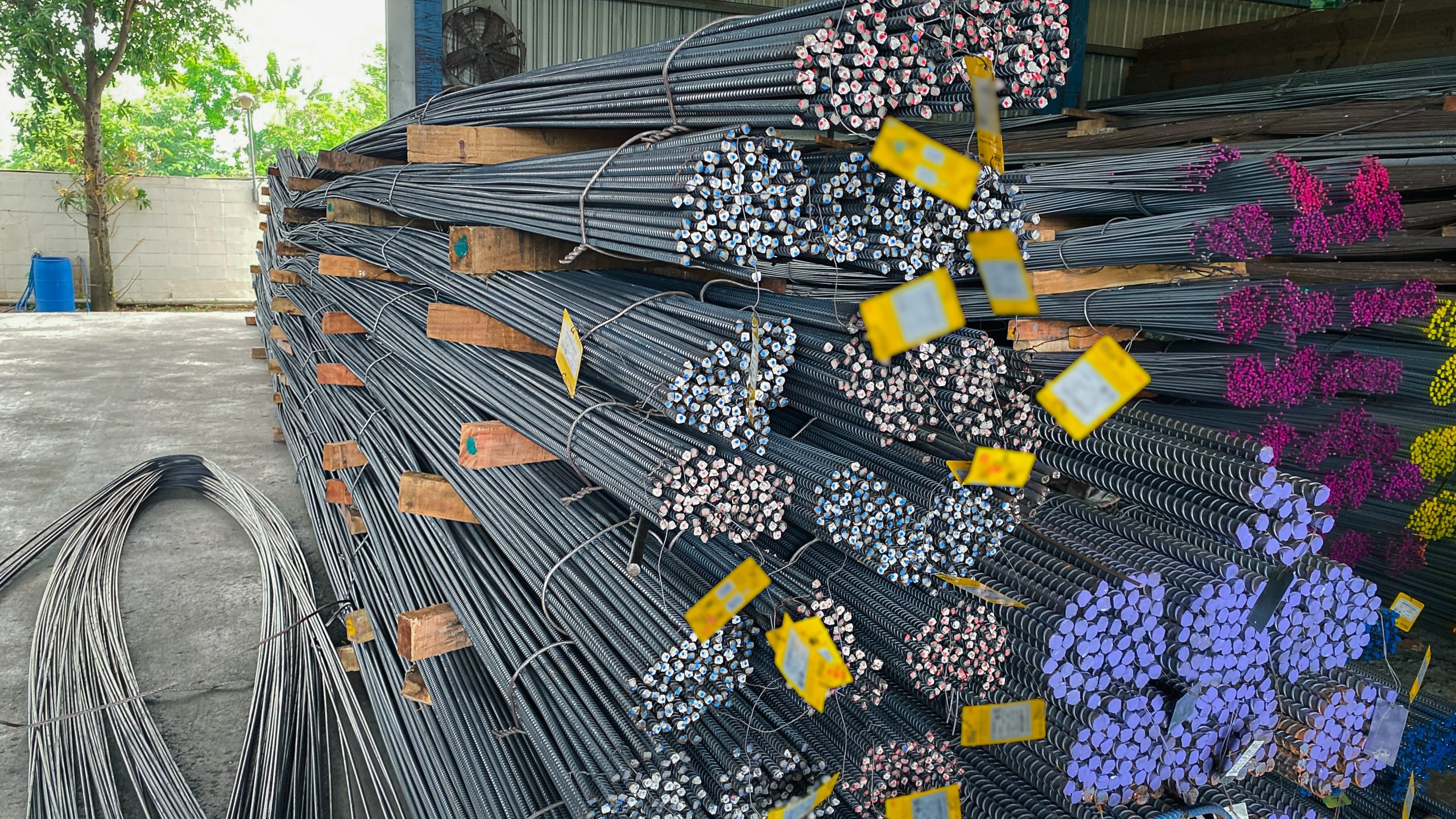
Deformed reinforcing steel bars are ribbed steel products commonly used as reinforcement in reinforced concrete structures to resist tensile forces. Due to their ribbed surface characteristics, deformed bars tend to retain water, dust, and corrosive contaminants; therefore, exposure to humid environments and chemicals during storage should be minimized. When stacking deformed reinforcing bars, excessive stacking height should be avoided to prevent excessive load on the lower bars, which may cause bending or deformation. Steel bars should be stacked in layers with appropriate height, using spacers and maintaining gaps between layers to ensure stability, while also facilitating inspection and stock release when required.
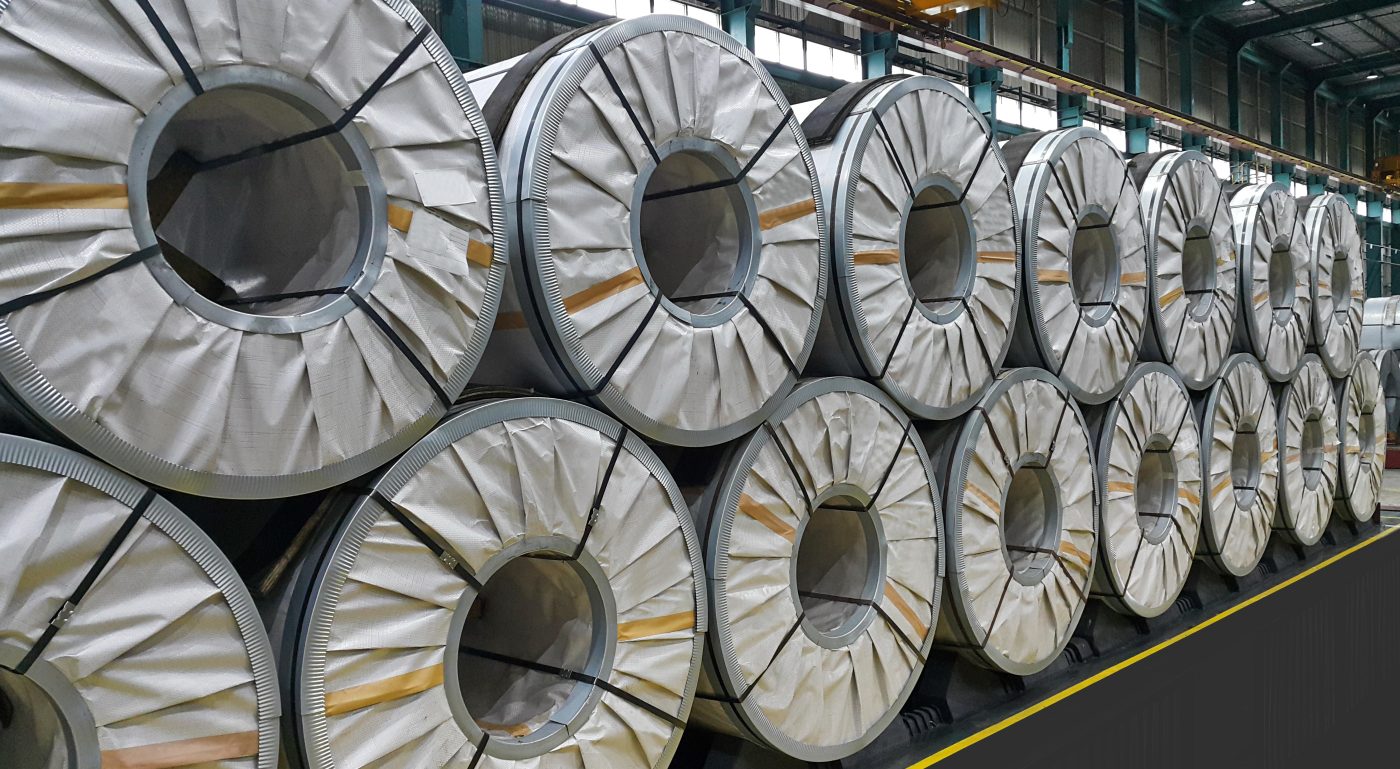
Steel coils mainly include two types: hot-rolled steel coils and cold-rolled steel coils, each having different surface characteristics and therefore requiring corresponding storage conditions. Hot-rolled steel coils have a thin natural oxide layer on the surface, which helps enhance short-term oxidation resistance. Nevertheless, the steel still needs to be stored in a dry, well-ventilated area with proper covering to prevent rainwater or standing water from causing long-term corrosion.
In contrast, cold-rolled steel coils have a smooth, glossy surface, thinner thickness, and are highly sensitive to moisture as well as mechanical scratches. Therefore, this type of steel should be stored in enclosed warehouses, protected from direct sunlight, and strictly kept away from corrosive chemicals such as acids, salts, or industrial solvents. During arrangement, steel coils should be placed in an upright position or at a slight incline on sturdy racks or supports to minimize deformation at the coil edges. In cases where horizontal storage is required, soft padding must be used to prevent denting or distortion, especially for thin-gauge steel coils.
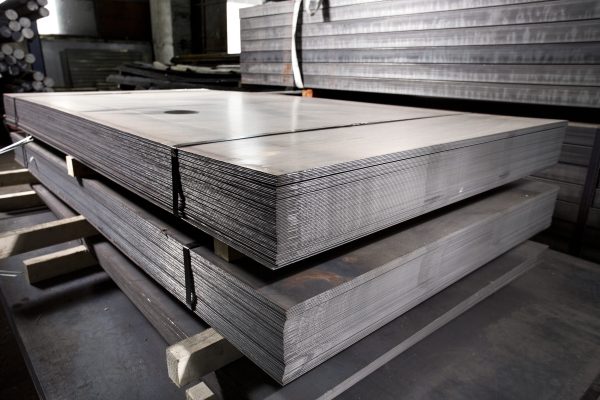
Steel plates have a flat surface and large area; therefore, they are highly susceptible to scratching, warping, or corrosion if not stored properly. During storage and handling, steel plates should not be dragged directly on the ground or stacked in multiple layers without adequate surface protection. An effective solution is to use racks or pallets with rubber, wooden, or plastic padding to support the steel plates, helping to evenly distribute loads and maintain surface flatness. When stacking multiple plates, soft separating materials should be placed between layers to minimize friction and prevent surface scratches. For cold-rolled steel plates, priority should be given to storage in enclosed, dry, and clean warehouses free from chemical vapors in order to preserve surface quality over long-term storage.
Other important considerations in the storage of construction steel include the following:
Construction steel should be kept away from corrosive chemicals.
Steel must not be placed directly on the floor when stored in warehouses or yards; wooden battens and protective pads should be used to improve product preservation.
If steel is stored outdoors, a dry and clean location should be selected, and the steel should be stacked with one end higher than the other during storage.
Avoid exposing steel to rain, as moisture can lead to oxidation and rust formation.
Different grades and types of steel should be segregated into separate areas to facilitate handling and transportation.
Rusty steel should not be stored together with non-rusted steel, as cross-contamination may accelerate deterioration.
Steel storage areas should be dry, well-ventilated, and maintained at moderate humidity levels. Under such conditions, construction steel can retain durability and surface quality even after extended storage periods.
If a project site has been identified, the material storage area should be arranged nearby to facilitate monitoring, supervision, and quality inspection.
Construction steel products should be stacked tightly to prevent vibration, movement, and impact during transportation.
Rust and corrosion are inevitable risks for construction steel due to continuous exposure to environmental conditions, storage environments, and construction activities. However, by understanding the causes of corrosion and applying appropriate storage methods tailored to specific usage conditions and steel types, material degradation can be effectively controlled and minimized. Proper steel storage not only helps maintain material quality, structural strength, and service life, but also contributes to cost savings, reduces material waste, and ensures safety throughout the construction process.
For each project, selecting suitable steel solutions and strictly complying with storage standards from warehousing through construction are key factors determining the long-term performance of the structure. If you are looking for a reliable construction steel supplier with stable quality and in-depth technical consulting, MRM Steel is a trusted partner for projects of all scales. With a diverse product portfolio, standardized supply sources, and a team of experienced specialists, MRM Steel is committed to delivering optimal, safe, and sustainable steel solutions tailored to actual customer needs. Contact MRM Steel today via Hotline: (877) 289-6429 for detailed consultation and to select the most suitable, safe, and sustainable steel solutions for your project.