
 EN
EN PT
PT


Head Offices:
Hotline: (877) 289-6429
Working Hours:
Monday to Saturday 6:00 AM – 7:00 PM, Sunday Closed
Website: https://mrmsteel.ai/
Hot-dip galvanizing is produced by immersing steel into molten zinc, forming a protective zinc coating. This coating acts as a barrier, protecting the steel from rust and corrosion. In this article, we will explain the concept, how the hot-dip galvanizing process works, explore its key benefits, standards, and examine common applications across various industries.
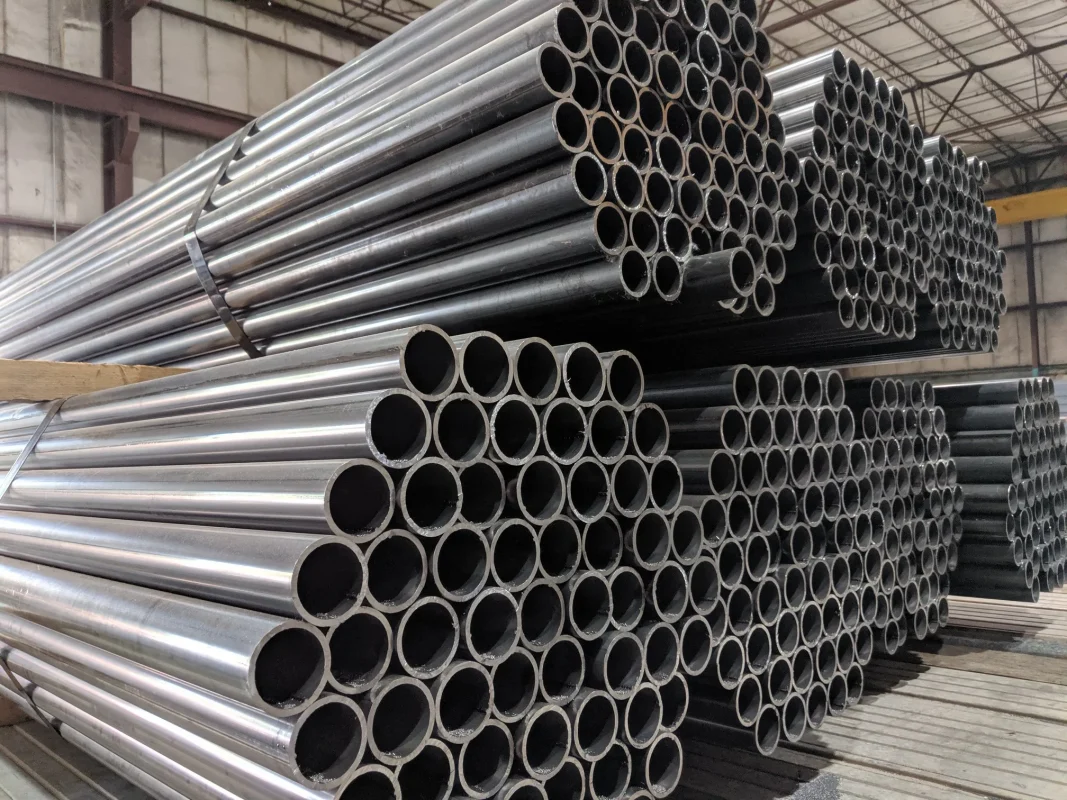
Hot-dip galvanizing involves coating steel with zinc by immersing it into molten zinc. The process begins by thoroughly cleaning the steel to remove all contaminants, followed by dipping the steel into molten zinc. This creates a durable protective coating that shields the steel from corrosion. Used in everything from outdoor fencing to structural beams, hot-dip galvanized steel is engineered for long-term durability.
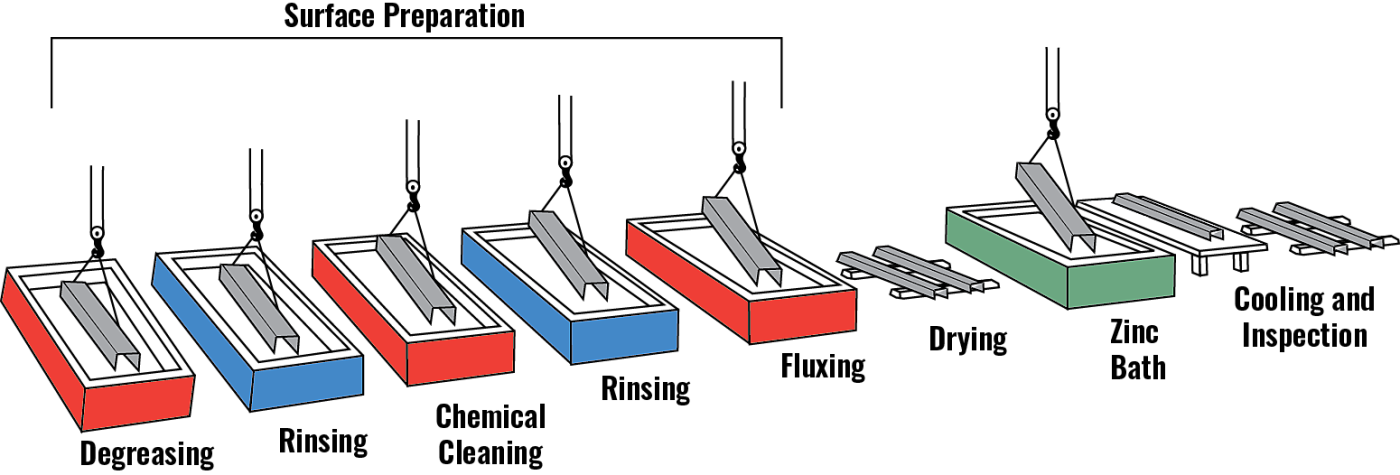
To create a durable protective coating, the standard hot-dip galvanizing process must strictly follow technological steps, which can be summarized into three main stages: surface preparation, zinc immersion, and finishing. Among them, surface preparation is considered the most critical stage, accounting for up to 80% of the adhesion strength and final coating quality.
Understanding these steps helps you monitor and evaluate product quality from suppliers more effectively..

This is the preparation stage, and any mistake at this step will prevent proper adhesion of the coating, leading to peeling and failure.
Step 1: Degreasing. Steel products are immersed in tanks containing alkaline or mild acidic solutions to completely remove grease, oil, dirt, and organic contaminants accumulated during fabrication.
Step 2: Pickling (Rust Removal). Next, the products are immersed in acid solutions (commonly hydrochloric acid – HCl) to thoroughly remove rust and mill scale. This process creates a chemically “clean” steel surface ready to react with zinc.
Step 3: Fluxing. After rinsing off acid residues, the products are immersed in a flux solution (commonly zinc ammonium chloride). This flux layer serves two critical purposes: removing remaining oxides and forming a thin protective film to prevent re-oxidation before immersion in the zinc bath. It acts as a “chemical bonding agent,” ensuring molten zinc can properly wet and react with the steel surface.
This is the most important stage of the entire process, where metallurgical reactions occur to form the protective coating.
Step 4: Galvanizing. The cleaned and flux-coated steel products are fully immersed in a galvanizing bath containing molten zinc at temperatures between 445–465°C. Within minutes, iron on the steel surface reacts with molten zinc to form a series of durable zinc–iron alloy layers.
Step 5: Cooling and Inspection. After removal from the zinc bath, excess zinc is removed, and the products are cooled either by air or water quenching (passivation). Finally, the products are thoroughly inspected for coating thickness, adhesion, and surface appearance to ensure compliance with quality standards before delivery.
Strict adherence to this five-step process ensures the final product achieves superior durability and service life, giving customers confidence in the quality of their construction projects.
Prepared and flux-coated steel is immersed in a molten zinc bath heated to approximately 450°C (842°F). This is where hot-dip galvanizing occurs, as steel forms a strong metallurgical bond with zinc, creating a protective coating.
After coating, the steel is removed from the zinc bath and allowed to cool. This step solidifies the zinc coating, ensuring hardness and long-term durability.
The coating thickness and coverage are inspected to ensure the galvanized steel meets quality standards and provides effective corrosion protection.
The superior durability of hot-dip galvanizing does not come from a simple coating like paint, but from a complex metallurgical reaction between iron and zinc. When steel is immersed in molten zinc (approximately 445–465°C), a multilayer coating structure forms that penetrates and integrates with the base steel surface. This structure consists of extremely hard zinc–iron alloy layers beneath and a ductile pure zinc outer layer, forming an inseparable protective “armor.”
Unlike paint, which adheres mechanically, hot-dip galvanizing creates a permanent bond where iron and zinc atoms diffuse into each other. This ensures the coating will never peel or blister like conventional surface treatments.
When clean steel products are immersed in molten zinc, a series of chemical reactions occur almost instantly. Iron (Fe) on the steel surface dissolves into molten zinc (Zn), while zinc atoms diffuse into the steel surface. This interaction creates a transition zone, forming distinct zinc–iron alloy layers with different compositions and properties.
The entire process occurs within minutes, resulting in a metallurgically bonded protective layer that becomes an integral part of the steel product.
The key distinction of hot-dip galvanizing lies in its unique layered structure, comparable to geological strata, with each layer serving a specific protective function.
The typical structure from inside to outside, as defined by ASTM A123, includes:
Gamma Layer (Γ): The innermost layer, directly contacting the base steel. Very thin, brittle, and extremely hard, containing approximately 25% iron. It provides the strongest foundational bond.
Delta Layer (δ): Thicker than the Gamma layer, very hard and durable, containing about 10% iron. According to metallurgical studies, the Delta layer is often harder than the base steel and plays a major role in wear and impact resistance.
Zeta Layer (ζ): Usually the thickest alloy layer, with gradually reduced hardness compared to Delta, containing about 6% iron. This layer offers greater flexibility, absorbing mechanical impacts and preventing cracking.
Eta Layer (η): The outermost layer, consisting of nearly pure zinc (>98% Zn). Relatively soft and ductile, it serves as the primary sacrificial layer, providing cathodic (electrochemical) protection when the coating is scratched.
The combination of these four layers creates a comprehensive protection system unmatched by any paint coating:
Impact and Abrasion Resistance: The hard Gamma and Delta alloy layers act as a buffer against physical damage, protecting the base steel during transportation, installation, and service.
Dual Corrosion Protection: The Eta layer acts as both a physical barrier and an electrochemical protector. If scratched, zinc corrodes preferentially to protect exposed steel.
Unmatched Adhesion: Formed through diffusion reactions, these layers cannot be separated from the steel surface. Adhesion strength reaches thousands of psi, far exceeding industrial coatings.
These are fundamentally different processes with distinct purposes. Hot-dip galvanizing prioritizes maximum corrosion protection, while electro-galvanizing (often called cold galvanizing) prioritizes surface aesthetics.
| Criteria | Hot-Dip Galvanizing | Electro-Galvanizing (Cold) |
| Bonding Mechanism | Metallurgical bond (zinc and iron alloyed) | Mechanical adhesion |
| Coating Thickness | Very thick (typically 50–100 µm) | Very thin (typically 5–25 µm) |
| Impact Resistance | Very high | Low |
| Surface Appearance | Matte gray, may be uneven | Bright, smooth, uniform |
| Primary Applications | Outdoor steel structures, harsh environments | Indoor components, machinery parts |
| Cost | Higher | Lower |
In summary, if long-term protection for outdoor structures is required, hot-dip galvanizing is irreplaceable. For bright surfaces in low-corrosion environments, electro-galvanizing is suitable.
Limitations of Hot-Dip Galvanizing
During the cooling process, hot-dip galvanized steel forms a distinctive pattern known as zinc spangle. This zinc coating may result in a rough or uneven surface, which may not be ideal for projects that require a smooth or highly aesthetic appearance.
The high temperatures involved in hot-dip galvanizing can cause steel to warp or distort, especially thinner or more complex structures. This may affect the dimensional stability of certain steel components, particularly those with uneven thickness.
In hot-dip galvanizing, controlling the exact thickness of the zinc coating can be challenging because the steel is immersed in molten zinc. Other methods, such as electroplating, offer more precise thickness control.
For small products and small quantities: The average galvanizing time ranges from 1–3 hours (including cleaning, degreasing, zinc immersion, and cooling).
For large batches or heavy steel structures: The process may take 6–12 hours due to additional time required for surface preparation, drying, and coating quality inspection.
This is the most common application field for hot-dip galvanizing, where structural lifespan and safety are top priorities. The zinc coating protects the structural backbone of buildings and public works from corrosion.
Industrial steel structures and pre-engineered buildings: Entire factory frames, purlins, trusses, and steel columns are galvanized to ensure structural integrity for decades, especially in industrial environments with chemicals or high humidity.
Construction scaffolding: Galvanized scaffolding has a service life many times longer than painted scaffolding, withstands impact and harsh site conditions, ensures worker safety, and reduces replacement costs.
Cable trays and ladders: Cable tray systems used to support electrical wiring in buildings and factories are commonly galvanized to prevent rust, reduce fire hazards, and protect electrical systems.
Steel grating (steel floor panels): Elevated steel floors and drainage grating in factories and operational areas are galvanized to withstand heavy loads and continuous corrosion.
Transportation
Safety and durability are the core requirements of transportation infrastructure. Hot-dip galvanizing plays a critical role in protecting steel structures from corrosion caused by vehicle emissions, de-icing salts (in temperate regions), and weather conditions.
Corrugated steel guardrails (safety barriers): Flexible guardrails along highways and national roads are galvanized to ensure structural durability and vehicle safety during impacts.
Bridge railings: Entire steel bridge railing systems, bridge beams, and related structures are galvanized to resist high humidity and corrosive elements.
Traffic signs and signal poles: Poles and supporting frames for traffic signs and signal lights are galvanized to remain durable and clearly visible over many years.
Agriculture and Aquaculture
Agricultural and aquaculture environments are highly corrosive due to moisture, chemicals, fertilizers, and animal waste.
Greenhouse and net house frames: Galvanizing helps structures withstand high humidity and agricultural chemicals, extending service life.
Livestock housing systems: Frames, cages, and flooring for livestock and poultry are galvanized for easy cleaning and resistance to corrosion from waste.
Aquaculture cages and floating structures: Steel cage structures used in seas, rivers, and lakes are galvanized to resist corrosion from saltwater and brackish water
Energy and Telecommunications
For the energy and telecommunications sectors, infrastructure reliability is critical. Maintenance of elevated or remote structures is extremely costly and hazardous; therefore, hot-dip galvanizing is nearly mandatory.
Power poles and lighting poles: Most steel utility poles and high-mast lighting poles along highways are galvanized to achieve service lives of 30–50 years without maintenance.
Substations and transmission support structures: Steel frames, beams, and support structures in substations are fully protected to ensure stable operation of national power grids.
Base transceiver station (BTS) towers: Telecommunications towers installed on rooftops or hilltops are directly exposed to rain, sun, and strong winds; galvanizing is the only solution that ensures long-term durability.
Renewable energy: Solar mounting structures and wind turbine tower components are galvanized to withstand harsh environments and ensure project lifespans of 20–25 years.
To evaluate product quality, it is necessary to rely on globally recognized hot-dip galvanizing standards. These standards are the only objective benchmarks to ensure the coating will protect structures for decades. A compliant product must meet three core criteria: minimum coating thickness, absolute adhesion, and surfaces free from critical defects.
TCVN 5811:2012: Standard for zinc coatings on steel products, specifying technical requirements, testing methods, and quality evaluation.
TCVN 6154:1996: Standard for galvanized structural steel, defining parameters and technical requirements.
ISO 1461: Specifies testing methods and requirements for hot-dip galvanized coatings on steel, ensuring coating thickness and durability
ISO 14713: Provides guidance on the use and maintenance of hot-dip galvanized steel products to ensure corrosion protection performance.
EN 10025: Specifies structural steel grades, including technical requirements for steels suitable for galvanizing.
EN ISO 1461: European equivalent of ISO 1461, defining requirements for hot-dip galvanized coatings on steel.
ASTM A123/A123M: Specifies technical requirements for hot-dip galvanizing of steel products, including coating thickness and inspection methods.
ASTM A153/A153M: Covers galvanizing requirements for small steel parts and fasteners, with specific coating thickness criteria.
JIS H 8641: Specifies hot-dip galvanizing requirements and zinc coating standards for steel and other metal products.
KS D 951: Standard related to hot-dip galvanizing of steel products and zinc coating quality requirements.
For high-quality hot-dip galvanized steel, MRM Steel supplies superior products that ensure long-term corrosion resistance from global suppliers. Whether structural beams, fences, pipes, or agricultural equipment, our hot-dip galvanized steel is engineered to withstand harsh environments and prevent oxidation. Contact MRM Steel today for detailed consultation via hotline: (877) 289-6429.