
 EN
EN PT
PT


Head Offices:
Hotline: (877) 289-6429
Working Hours:
Monday to Saturday 6:00 AM – 7:00 PM, Sunday Closed
Website: https://mrmsteel.ai/
What Is a Roll Forming Machine? Structure, Working Principle and Practical Applications. In modern construction, metal roofing sheets are among the most widely used materials for roofing and wall cladding in various types of buildings. From residential houses and industrial factories to commercial buildings and pre-engineered steel structures, metal roofing is preferred because of its high durability, light weight, and fast installation process. In addition, roofing sheets are available in many profiles, colors, and designs, allowing them to meet both structural requirements and aesthetic demands.
To produce roofing sheets with precise shapes and dimensions, manufacturers use specialized industrial equipment known as a roll forming machine. This mechanical system is capable of forming flat metal coils into roofing sheets with different profiles such as trapezoidal sheets, corrugated sheets, or tile-effect roofing sheets. Thanks to continuous cold roll forming technology, the production process can operate efficiently while maintaining consistent product quality.
Today, roll forming machines are widely used in the construction materials industry. In addition to increasing production capacity, these machines help reduce labor costs and improve manufacturing accuracy. This article provides a detailed overview of roll forming machines, including their definition, structure, working principle, common machine types, and practical applications in the construction industry.

A roll forming machine is an industrial machine designed to convert flat metal coils into profiled roofing sheets according to specific design requirements. The forming process is performed through a series of forming rollers that gradually bend the metal strip until the final profile is achieved.
Unlike traditional metal forming processes such as press braking or stamping, roll forming machines operate based on a continuous cold forming principle. During this process, the metal strip passes through multiple forming stations. Each station introduces a small change in the shape of the material, allowing the metal to gradually take on the desired profile.
Cold roll forming offers several advantages in metal processing. The material does not experience sudden deformation or structural damage during the forming process. At the same time, protective surface coatings such as galvanized layers or pre-painted finishes remain intact, which helps improve corrosion resistance and product durability.
The raw materials used in roll forming machines typically include galvanized steel coils, galvalume steel coils, pre-painted steel coils, and sometimes aluminum coils. These metal coils can weigh several tons depending on production requirements. After passing through the entire roll forming line, the metal coil is transformed into roofing sheets with specific dimensions and profiles required by customers or industry standards.
In the building materials industry, roll forming machines are considered essential equipment for manufacturing roofing sheets at high speed and with consistent quality. A modern roll forming line can produce dozens of meters of roofing sheets per minute, allowing manufacturers to meet large-scale market demand.
A standard roll forming machine consists of several mechanical components and an electronic control system. These components are designed to work together in a synchronized manner to ensure continuous and stable production.
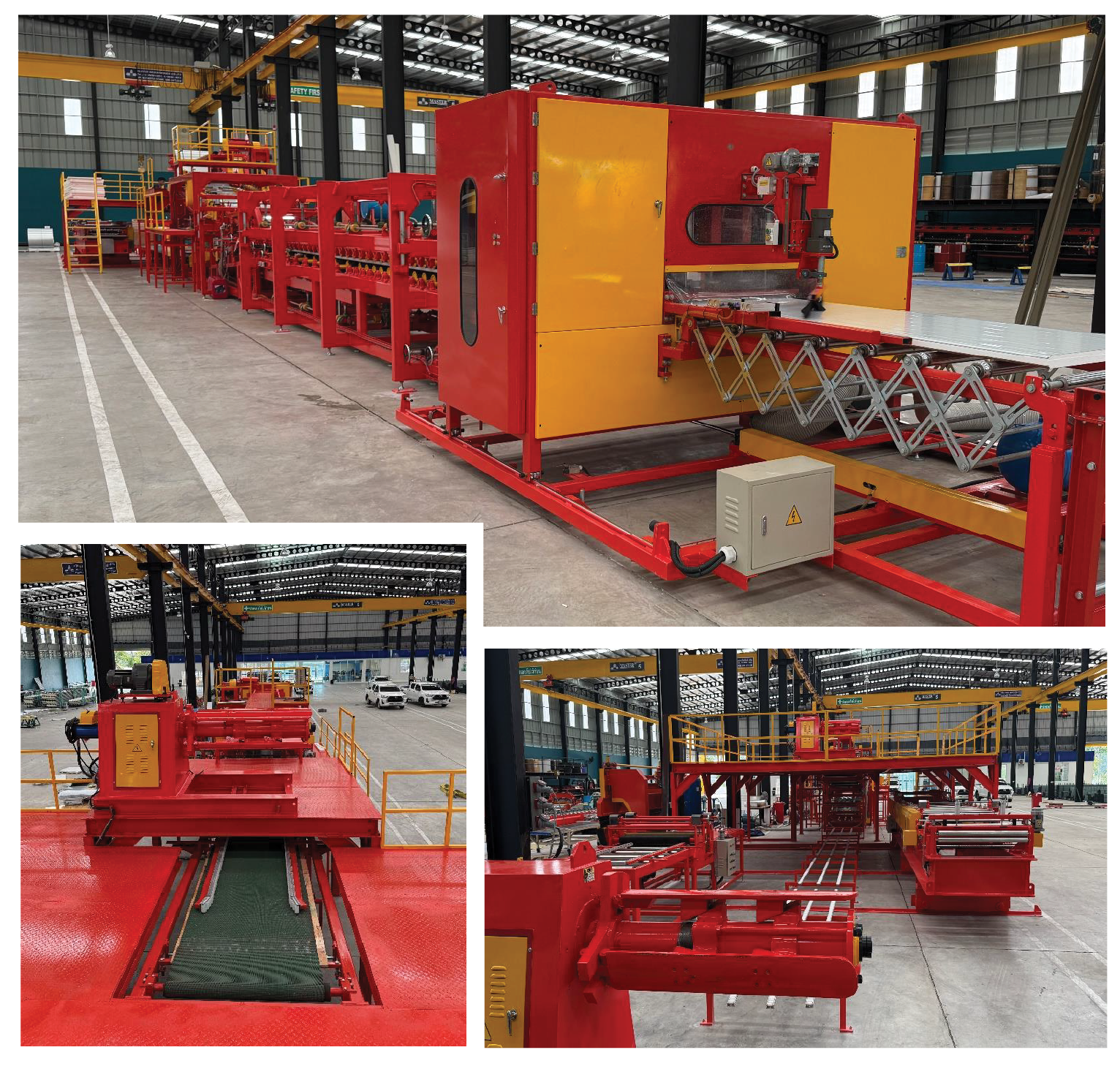
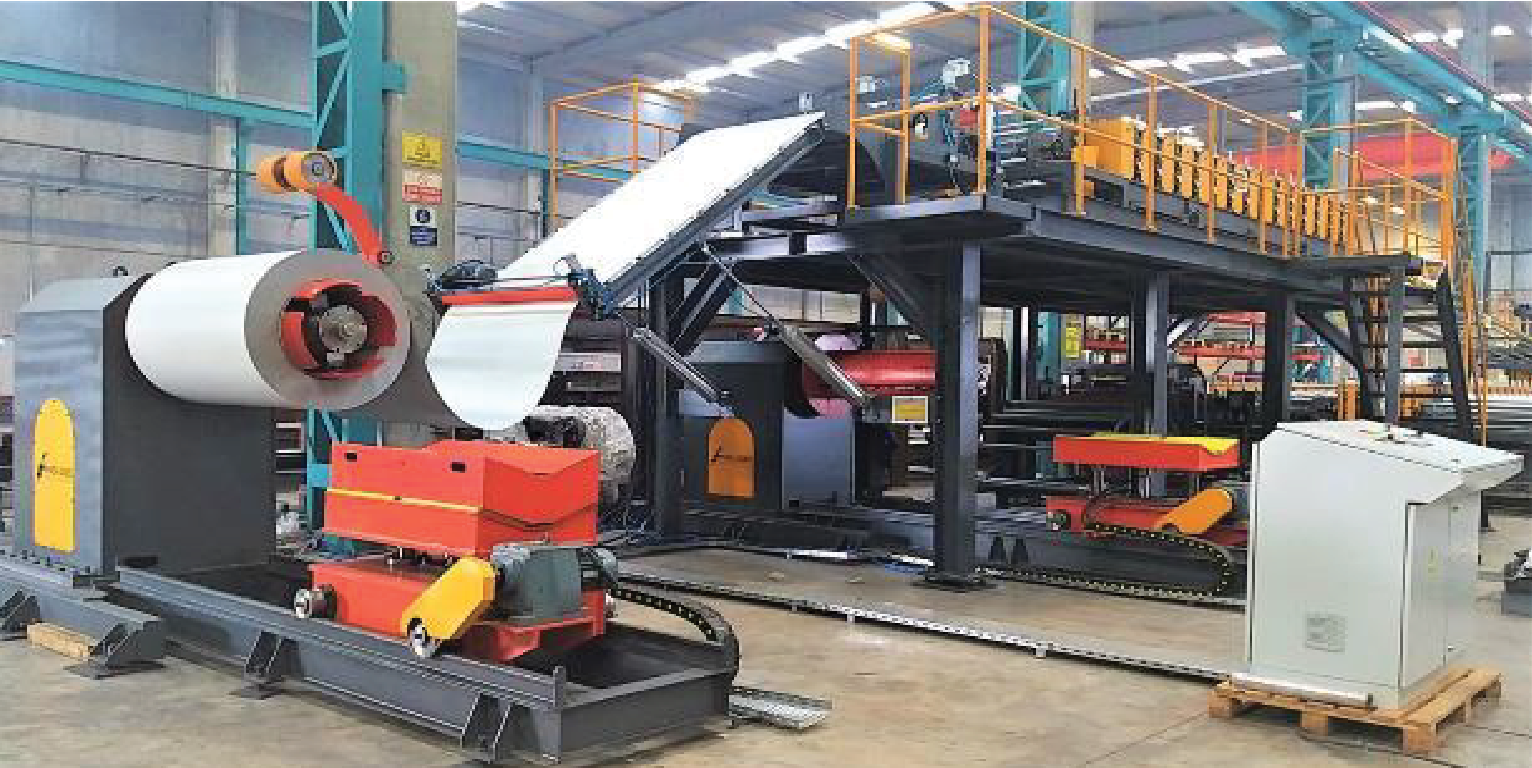
At the beginning of the production line is the decoiler system. This component holds the metal coil and feeds the material into the production line at a controlled rate. The decoiler frame is usually designed to support heavy coil weights. The uncoiling speed must match the feeding speed of the roll forming machine to prevent material tension or misalignment.
After leaving the decoiler, the metal strip passes through the guiding system. This system aligns the material and ensures it enters the roll forming section at the correct position. Proper alignment is essential for maintaining accurate sheet profiles and consistent wave shapes.
The next section is the roll forming station, which is the most critical part of the machine. This section consists of multiple forming shafts and rollers that are precisely machined according to the desired sheet profile. The rollers are typically made from hardened alloy steel to ensure long service life and high wear resistance. As the metal strip passes through each forming station, the rollers gradually bend the material until the final profile is achieved.
Once the sheet profile has been fully formed, the hydraulic cutting system cuts the roofing sheet to the preset length. The cutting die is usually designed according to the exact profile of the sheet to ensure clean and accurate cuts without damaging the formed profile. Hydraulic cutting systems can generate strong cutting forces, allowing them to cut even thicker steel sheets efficiently.
The entire roll forming line is controlled by a PLC control system. This central control unit manages all machine operations. Operators can set parameters such as sheet length, production quantity, and operating speed through a control interface. With PLC automation, the production process becomes more efficient and maintains high precision.
Roll forming machines operate based on the principle of continuous cold roll forming. This method forms metal by gradually bending the material using multiple roller stations until the desired profile is achieved.
The production process begins when a metal coil is placed onto the decoiler. The metal strip from the coil is fed into the production line and guided through the alignment system. This guiding system ensures that the material enters the forming section in the correct position.
When the machine motor starts running, the forming rollers pull the metal strip forward through the roll forming stations. As the strip passes through each station, the rollers apply gradual bending forces to shape the material.
Each roller station only makes a small adjustment to the shape of the material. This step-by-step forming process prevents sudden deformation and ensures that the structural integrity of the metal remains intact.
After the sheet profile has been completely formed and exits the roll forming section, a length measurement system detects the sheet length. Once the preset length is reached, the PLC sends a signal to activate the hydraulic cutting system.
The cutting blade quickly cuts the sheet into individual panels. After cutting, the finished roofing sheet is transferred to the output table or stacking area. The production process then continues with the next sheet until the programmed quantity is completed.
There are various types of roll forming machines available on the market today. These machines are designed to meet different production requirements for manufacturers.
Single-layer roll forming machines are the most basic type. These machines produce only one sheet profile. Their advantages include strong structural stability, reliable operation, and long service life. However, manufacturers that need multiple roofing profiles must invest in additional machines.
Double-layer roll forming machines are widely used in many roofing sheet factories. The two-layer design allows the machine to produce two different sheet profiles using a single machine frame. This design helps manufacturers save factory space and reduce initial investment costs.
Triple-layer roll forming machines are typically used in large-scale manufacturing plants. These machines integrate three forming systems into one structure, allowing the production of multiple sheet profiles on a single production line. However, triple-layer machines are larger and require strong factory foundations to ensure safe operation.
Roll forming machines can also be classified based on the sheet profile they produce. Common examples include trapezoidal sheet roll forming machines, corrugated sheet roll forming machines, and tile-effect roofing sheet machines. Each machine uses specially designed roller sets to produce the required profile.
Roll forming machines are widely used in the construction and building materials industries. Due to their ability to produce large quantities of accurately formed sheets, they play a key role in supplying materials for various construction projects.
In industrial construction, metal roofing sheets are commonly used for factory buildings, warehouses, and pre-engineered steel structures. These structures usually require long roofing panels to minimize the number of joints. This helps improve waterproof performance and overall roof durability.
In residential construction, roofing sheets are widely used for houses, townhouses, and villas. Pre-painted roofing sheets and tile-effect sheets enhance the visual appearance of buildings while maintaining durability and weather resistance.
Metal sheets are also used for wall cladding, ceiling panels, construction site fencing, and temporary barriers during building projects. Because of their flexibility and cost-effectiveness, metal roofing sheets remain a practical solution for many types of construction.
Investing in a roll forming machine helps building material manufacturers significantly increase production capacity and meet market demand more effectively. A modern roll forming production line can produce thousands of meters of roofing sheets per hour, allowing companies to complete large orders quickly.
Automation systems also reduce the amount of labor required to operate the equipment. Operators only need to set parameters on the control panel and monitor the machine during operation. This reduces labor costs and minimizes production errors.
Additionally, roll forming machines help optimize material usage. Roofing sheets are cut according to precise dimensions, which reduces raw material waste and improves production efficiency.
MRM Steel is a professional supplier of roll forming machines and metal forming production lines for the construction materials industry. The machines provided by MRM Steel are designed with robust machine frames, high-quality alloy steel rollers, and modern automated control systems.
In addition to supplying equipment, MRM Steel provides consultation services to help customers select the most suitable machines for their production needs. The technical team also supports installation, operator training, and technology transfer to ensure efficient machine operation.
With extensive experience in roll forming technology and metal forming equipment, MRM Steel is committed to delivering reliable solutions that help customers improve production efficiency and maintain high product quality. For more information about roll forming machines or production line solutions, please contact MRM Steel via hotline (877) 289 – 6429 for professional consultation.