
 EN
 PT


Linha Direta: (877) 289-6429
Horário de Funcionamento:
Segunda a Sábado, das 06:00 às 19:00; Fechado aos Domingos
Site: https://mrmsteel.ai/
Roofing Steel Coil: How We Prepare a Dark Color Order
When a roll forming shop or panel maker orders roofing steel coil in a dark color, the order looks simple on paper: a gauge, a width, a coating, a color name. In practice, dark colors are the ones that leave the least room for error. Marks show, color differences show, and a mistake on the coil becomes a mistake on every panel made from it. This is how we prepare a dark color order at MRM Steel as a roofing steel supplier, and why we spend as much time on the paperwork as on the steel.
The example we use is one customers ask about often: matte black, 24 gauge Galvalume coil for mechanical lock roofing panels. The same steps apply to other colors and gauges.

Why Dark Colors Need More Attention
Any coated roofing steel can be damaged in handling, but dark colors make the damage easy to see. A light scratch that disappears on a pale color can stand out on black. Small differences in shade between two coils, which would go unnoticed on a light color, can be visible when two panels sit side by side on a roof. And glare and finish matter more on a matte color, where the surface is meant to look even.
That does not make dark colors difficult to supply. It means we ask a few more questions at the start and check a few more things before the coil leaves.
Questions We Ask First
A good roofing steel coil order starts with the customer’s line, not with a price list. For metal roofing coil in a dark color, the answers below decide almost everything that follows.
Before we quote a roofing steel supplier order for a dark color, we ask:
- What are you making? The panel profile and the machine tell us the width, the thickness and the coil size you need.
- What gauge? The number runs backwards, so 24 gauge is thicker than 26 gauge. We confirm the actual thickness in decimal inches or millimeters, since a gauge number alone leaves room for interpretation.
- What base steel and coating? For Galvalume, that means aluminum-zinc coated steel made to a standard such as ASTM A792, with a stated coating designation.
- Bare or prepainted? A matte black panel starts as a prepainted coil, so we need the paint system, finish and any warranty requirements.
- What color, and in what quantity? The quantity matters because it tells us whether the whole job can come from the same paint batch.
- What does your equipment accept? The inside diameter, maximum weight and width of the coil must match the decoiler.
- When do you need it, and what is your delivery point? This sets the schedule, and it is where we talk about margin.
None of these questions is unusual. The point is that they are all asked before we quote, because an answer discovered after production is expensive.
Gauge and Thickness
For a roofing steel coil, thickness is one of the first things that gets confirmed in writing. A thicker 24 gauge steel coil for roofing generally resists denting and waviness better than 26 gauge, and that is a common reason panel makers choose it for premium or dark-colored products. One supplier lists a minimum thickness of about 0.023 inches for 24 gauge Galvalume and 0.018 inches for 26 gauge. Other charts differ slightly and some list nominal values, so we ask customers to confirm the actual figure, and whether it is a minimum or a nominal value, in the order.
Coating and Color
For coated roofing steel, the coating designation and the paint system are as important as the thickness. We confirm:
- The coating standard and weight. For Galvalume, the designation should match on the quote, the order and the mill test certificate. If it does not, the difference has to be explained before shipment.
- The paint system. Different systems age and fade differently, and warranty terms depend on them.
- The color reference. We confirm the exact color name or code, because similar-looking blacks and bronzes can differ.
- The paint batch. For a large order in a dark color, we try to keep the coils for one job together, so the color stays consistent from the first panel to the last. If the order has to come from more than one batch, we tell the customer, so they can plan how panels are mixed on the roof.
We do not guess at these items. If a customer cannot say which paint system or warranty they need, we help them work out what to ask their own customers.
Putting the Order in Writing
Before we release a dark color order, we write it up on one page: base steel and thickness, coating designation, paint system and color, coil width, inside diameter, maximum weight, packaging, the documents that ship with the coil, and the delivery estimate. We ask the customer to correct anything that does not match their line or their customers’ requirements.
A written sheet gives both sides something to check. If a shipment arrives that does not match it, there is no argument about what was agreed.
Handling, Packing and Protection
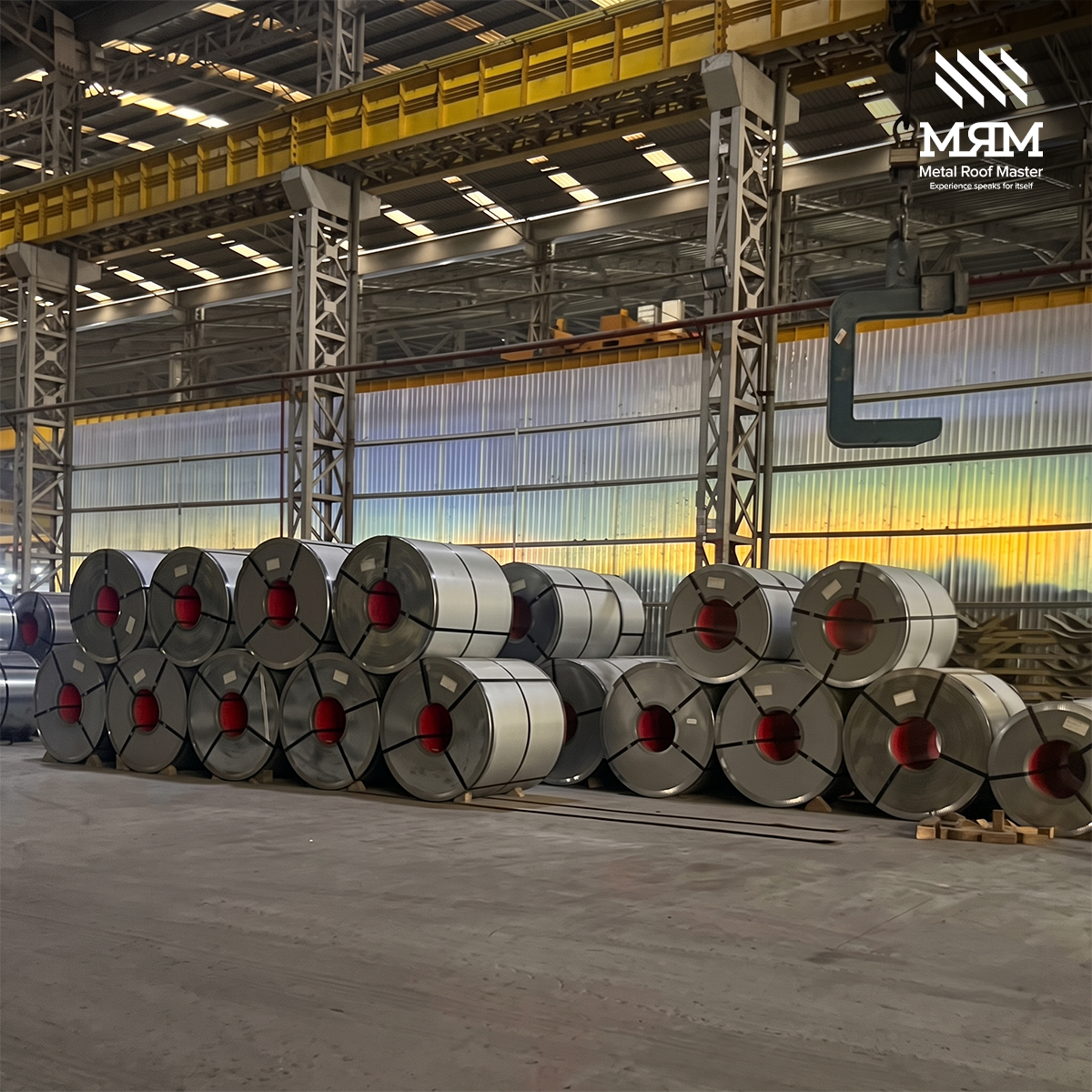
Roofing sheet coil is heavy and its finish is delicate, so handling is part of the specification, not an afterthought.
Dark finishes need careful handling. Our general practice is to pack and band coils for handling and transit, with protection on the edges and tags that carry the coil number, width, thickness and weight. Painted coil often carries a protective film that should stay on until the panel is formed, so we remind customers about it. We also ask them to inspect packaging on arrival, note any damage or wetting on the delivery paperwork before signing, and call us before running a coil that looks affected.
If you are storing coil, keep it dry, off the ground and covered. Moisture trapped against coil is a problem for any steel, and on a painted coil it can mark the finish.
The Documents That Travel With the Coil
A coil order is only as good as the paperwork that goes with it. We make sure the documents the customer receives match the material that arrives: the mill test certificate, the packing list and the coil tags, matched by coil number. Before anything ships, we check that the product ordered, the documents and the material agree.
For a dark color order, we also confirm that the color and the coating designation appear consistently across the order, the packing list and any paint documents. If a number does not match, we fix it before release and tell the customer what we found.
Scheduling Around the Holidays
Holiday weeks tighten schedules everywhere: trucking, ports, warehouses and receiving docks all run reduced hours. For a customer who needs coil by a particular date, we plan with a margin and state it in the delivery estimate. We also ask for the receiving dock’s holiday hours and tell customers how we will keep them updated if the shipment moves. We do not promise a date that depends on things we cannot control. We would rather give an honest estimate with a stated margin.
What We Look For When a Customer Switches Supplier
A roll forming shop that changes its roofing coil source is taking a risk, and we treat the first order as a test. We suggest a trial order when it makes sense, so the customer can check the coil, the paperwork and the delivery before depending on them. We also tell customers directly where a different product might suit them better. For example, Galvalume performs well on roofing, but its behavior at cut edges and in some environments differs from other coatings, so the right choice depends on the project.
Frequently Asked Questions
What should I confirm when ordering roofing steel coil? The base steel and thickness, the coating designation and standard, whether it is bare or prepainted, the paint system and color, the coil width, inside diameter and weight, and the documents that will ship with it.
Why do dark colors need extra care? They show scratches, handling marks and shade differences more easily than light colors, so handling, packing and batch consistency matter more.
Is 24 gauge better than 26 gauge for roofing? It is thicker, which generally means better resistance to denting and waviness. The right choice depends on the panel, the project and the budget.
What does a mill test certificate tell me? It documents the coil’s properties and identifies it by coil number, so it can be matched to the packing list and tags. Check that the coating designation on the certificate matches your order.
Planning a Roofing Coil Order?
Tell us what you make, which equipment you run, what color and gauge you need, and when you need the coil. We will walk through the same steps with you, including where a different product might suit you better. Contact the MRM Steel team or browse our product list.
Related Reading
For a closer look at how we match a shipment’s documents, read “Steel Coil Supplier USA: 8-Ton GI Shipment Story.” For what separates a good prepainted coil supplier, read “PPGL Steel Supplier: What Sets Quality Coil Apart.”